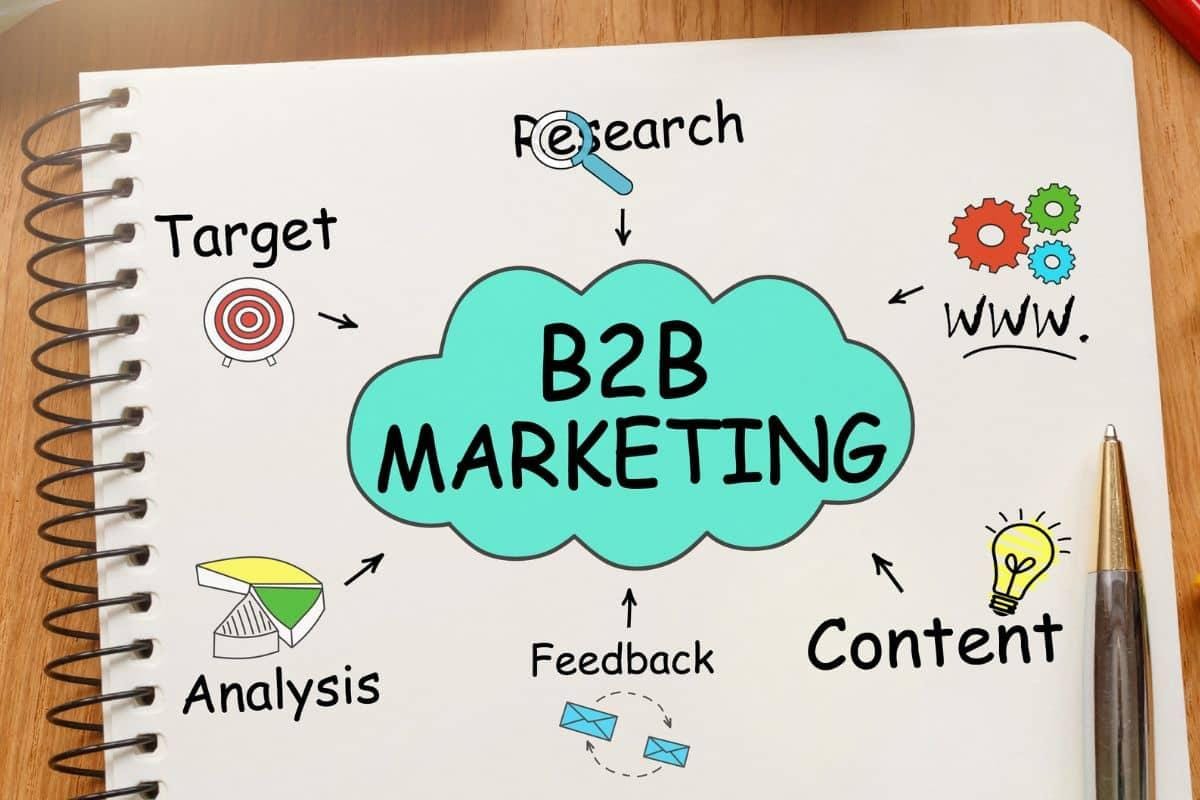
For B2B companies, marketing is the engine that fuels the sales pipeline and, ultimately, revenue growth. Yet, many programs fall short, generating leads that don’t convert or activity that fails to impact the bottom line. The gap between a generic marketing effort and one that consistently drives revenue is strategic discipline. It requires moving beyond brand awareness to directly influence complex buying committees and lengthy sales cycles.
This shift demands a focus on both foundational principles and agile execution. Implementing effective B2B marketing isn't about chasing every new trend; it's about building a system that aligns marketing activities with sales objectives and business outcomes. It requires a clear understanding of your ideal customer profile, the value you provide, and the measurable path from prospect to closed deal.
The following sections outline a framework for building that system. We will explore how to establish a revenue-centric foundation, examine modern tactics for engagement, align sales and marketing efforts, and, crucially, measure what truly matters.
Building a Revenue-Centric Marketing Foundation
Before launching campaigns, you must solidify the groundwork. A strategy built on vague goals or incorrect assumptions will waste resources.
Start by rigorously defining your Ideal Customer Profile (ICP). Go beyond firmographics like industry and company size. Include technographics (what software they use), psychographics (their primary business challenges), and specific trigger events that indicate readiness to buy, such as a new funding round or regulatory change. This specificity allows for highly targeted messaging.
Next, develop a value proposition that speaks directly to the economic and operational outcomes your solution delivers. Avoid feature lists. Instead, articulate the tangible business value: “Our platform reduces supplier onboarding time by 60%, cutting procurement costs by an average of 15% annually.” This value-centric messaging resonates with executives focused on ROI.
Finally, map the buyer’s journey for each key persona within your ICP. Understand their information needs at the awareness, consideration, and decision stages. Your content and channel strategy should be designed to meet these needs proactively, guiding prospects logically toward a purchase decision. A well-defined foundation turns random acts of marketing into a coordinated, purposeful engine for growth.
Modern Tactics for Engagement and Lead Generation
With a strong foundation, you can deploy tactics that actively engage your defined audience. The modern B2B buyer is informed, skeptical, and conducts most of their research independently before ever speaking to sales.
Content Marketing with a Strategic Focus Create content that addresses specific pains and aspirations identified in your buyer journey map. A mid-funnel whitepaper might detail a framework for solving a common operational inefficiency, while a bottom-funnel case study should spotlight quantifiable results achieved for a client in your ICP. Gated content like this remains a cornerstone for B2B marketing, but its quality must justify the exchange of contact information.
Account-Based Marketing (ABM) Execution ABM is the ultimate expression of a targeted, revenue-focused strategy. Instead of casting a wide net, you market directly to a curated list of high-value target accounts. Tactics include personalized email campaigns, targeted digital advertising (using IP targeting or LinkedIn account matching), and custom content. The goal is to create a coordinated buying experience for all key stakeholders within that single account.
LinkedIn and Strategic Social Selling LinkedIn is an unparalleled platform for B2B engagement. Beyond company page updates, empower your sales and marketing teams for social selling. This involves sharing insights, contributing to industry conversations, and building relationships with prospects at target accounts. It’s a long-term play that builds credibility and warms leads before the first sales call.
Aligning Sales and Marketing for Pipeline Velocity
The infamous sales-marketing misalignment is a major revenue leak. Closing this gap is non-negotiable for effective revenue generation.
Establish a Service Level Agreement (SLA) between the departments. This formal document defines what constitutes a Marketing Qualified Lead (MQL) and a Sales Qualified Lead (SQL), including explicit criteria like budget, authority, need, and timeline (BANT). It also sets expectations for lead volume and follow-up timing (e.g., sales contacts all SQLs within one hour).
Implement a closed-loop feedback system. Marketing must regularly review which leads convert to opportunities and customers, and which ones stall. Sales must provide qualitative feedback on lead quality. This data allows marketing to refine targeting, messaging, and lead scoring models continuously, creating a flywheel of improvement.
Shared technology is critical. A robust Customer Relationship Management (CRM) system, integrated with marketing automation, provides a single source of truth. Both teams can track lead source, engagement history, and deal stage, fostering transparency and enabling coordinated touchpoints throughout the buyer's journey.
Measuring What Matters: From Clicks to Revenue
Vanity metrics like website clicks and social media likes offer little insight into revenue impact. To gauge true effectiveness, you must track metrics tied directly to pipeline and financial outcomes.
Focus on these key performance indicators:
● Marketing-Sourced Pipeline: The total value of sales opportunities created by marketing efforts. This directly links activity to potential revenue.
● Cost Per Lead (CPL) & Customer Acquisition Cost (CAC): Monitor CPL, but always in the context of CAC and customer lifetime value (LTV). A low CPL is meaningless if those leads never convert to profitable customers.
● Lead-to-Customer Conversion Rate: This measures the efficiency of your entire funnel, from initial inquiry to closed deal. Improving this rate is often more valuable than simply generating more top-of-funnel leads.
● Revenue Attribution: Use multi-touch attribution models to understand how different channels (e.g., webinars, SEO, paid ads) work together to influence a sale. This informs smarter budget allocation.
Regularly reporting on these metrics to leadership shifts the conversation from marketing spend to marketing investment, demonstrating how specific B2B marketing strategies that drive revenue contribute to company growth.
Frequently Asked Questions
What is the biggest difference between B2B and B2C marketing?
The core difference lies in the audience and decision-making process. B2B marketing targets businesses, involving multiple stakeholders in a rational, value-driven buying committee. The sales cycle is longer, and messaging must focus on ROI, risk reduction, and efficiency gains. B2C marketing typically targets individual consumers making faster, more emotionally-driven purchases.
How long does it take to see results from a new B2B marketing strategy?
Due to complex sales cycles, expect a minimum of 3-6 months to see meaningful pipeline movement and 6-12 months to accurately measure revenue impact. Tactics like SEO and content marketing are long-term investments, while paid campaigns can generate leads more quickly but often require optimization over time to become cost-effective.
Is Account-Based Marketing (ABM) right for every B2B company?
ABM is most effective for companies with a clearly defined, finite market of high-value accounts, such as enterprise software vendors or specialized manufacturers. If your potential customer base is vast and less defined (e.g., selling SaaS to SMBs), a broader inbound or lead-gen approach may be more efficient, though ABM principles can still be applied to your top-tier prospects.
What is a good lead-to-customer conversion rate in B2B?
Benchmarks vary widely by industry, price point, and sales cycle length. However, a conversion rate of 1-5% from marketing-qualified lead (MQL) to customer is a common range for many B2B sectors. The more important metric is your own baseline; focus on improving your rate over time through better lead qualification and sales-marketing alignment.
How much should a B2B company budget for marketing?
Marketing budgets are typically expressed as a percentage of revenue. For established B2B companies, this often ranges from 5-15% of total revenue. High-growth companies or those in competitive tech sectors may invest 20% or more. The budget should directly support your growth goals and be allocated across channels based on their proven ROI.
Conclusion
Implementing effective B2B marketing that reliably drives revenue is a systematic endeavor. It begins with the disciplined work of defining your ideal customer and quantifying your value. This foundation informs the selection and execution of modern tactics, from strategic content and ABM to aligned social selling. Crucially, success hinges on breaking down silos between sales and marketing, creating a unified revenue team guided by shared goals and transparent data.
Ultimately, the shift from activity-based to outcome-based marketing transforms the function from a cost center to a growth driver. By consistently measuring impact through the lens of pipeline and revenue, marketing leaders can make informed strategic decisions, optimize resource allocation, and demonstrably contribute to sustainable business growth. The path forward is clear: build with purpose, execute with precision, and measure what matters.