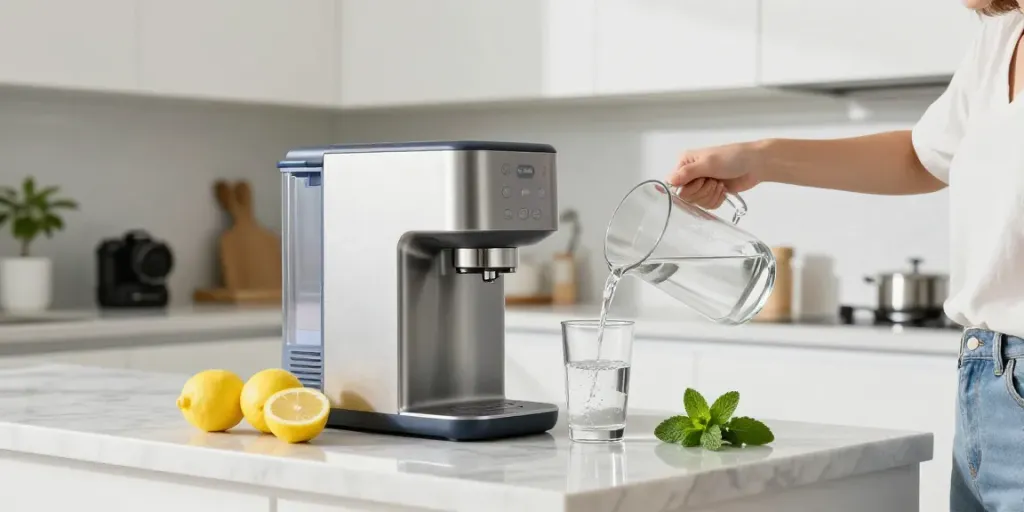
Understanding Distilled Water
When it comes to clean drinking water, understanding the nuances of different purification methods is crucial. Two popular choices, distilled water and reverse osmosis (RO) water, provide significantly high levels of purity. This article explores their differences, uses, and recommendations for daily consumption, especially for urban households. Understanding the distilled water purified water difference can help you make informed decisions about your hydration choices.
What is Distilled Water?
Distilled water is a type of purified water that has undergone a distillation process, which involves boiling water to produce steam and then cooling the steam to revert it back to liquid form. This method effectively removes impurities, including dissolved solids, minerals, and contaminants, resulting in extremely pure water. Distilled water is often used in laboratories, medical facilities, and industrial applications where a mineral-free option is necessary.
Purification Process and Characteristics
The distillation process begins by heating water to its boiling point. As the water turns into steam, impurities that do not evaporate remain in the boiling container. Once the steam is collected, it is cooled, condensing back into water, which is then collected as distilled water. Key characteristics of distilled water include:
- High purity, often above 99% free of contaminants.
- Neutral taste, as it lacks minerals.
- Energy-intensive production process.
Common Uses of Distilled Water
Due to its purity, distilled water is commonly used in various applications, including:
- Medical devices requiring sterile water.
- Steam irons to prevent mineral buildup.
- Laboratory tests where mineral interference must be eliminated.
Exploring Reverse Osmosis Water
In contrast, reverse osmosis (RO) water is produced through a filtration process that uses a semi-permeable membrane to eliminate contaminants and impurities. This method is popular in residential water purification systems, as it effectively balances high purity with practical usability.
What is Reverse Osmosis Water?
Reverse osmosis water is produced by forcing tap water through a semi-permeable membrane that removes dissolved solids, heavy metals, chemicals, and microorganisms. This method is highly effective, often achieving a 99% removal rate of contaminants.
How Does Reverse Osmosis Work?
The reverse osmosis process typically involves several stages:
- Pre-filtration removes larger particles and sediments.
- The RO membrane filters out dissolved solids and contaminants.
- Post-filtration may include additional treatment, such as UV sterilization.
This multi-stage approach ensures that the water produced is not only pure but also safe for drinking and cooking.
Benefits of Reverse Osmosis Systems
Reverse osmosis systems provide numerous benefits, including:
- Effective contaminant removal, including chlorine, lead, and fluoride.
- Improved taste and odor of drinking water.
- Convenient and cost-effective long-term solution for home purification.
Comparative Analysis: Distilled vs. Reverse Osmosis
When comparing distilled water and reverse osmosis water, several factors highlight the differences between these two purification methods.
Purity Levels and Contaminant Removal
Both distilled and reverse osmosis water are capable of removing a significant number of contaminants. However, distillation typically achieves a slightly higher purity level in terms of total dissolved solids. Reverse osmosis systems, while also highly effective, may require regular maintenance to ensure optimal performance.
Taste Differences and User Preferences
The taste of water can greatly influence consumer preferences. Distilled water often tastes flat because it lacks minerals; in contrast, reverse osmosis water usually retains some minerals, which can enhance its flavor. Moreover, many modern RO systems are designed to add minerals back into the water, making it more appealing to drink.
Environmental Impact and Sustainability
While both methods contribute to reducing reliance on bottled water, their environmental impacts vary. Distillation requires a considerable amount of energy, which can contribute to higher electricity bills, especially in large-scale operations. Conversely, reverse osmosis systems are generally more energy-efficient and can produce more water without constantly consuming power, making them more sustainable for daily household use.
Why Choose Reverse Osmosis Over Distilled Water?
Many health experts recommend reverse osmosis water for daily consumption, especially for families and individuals looking for a reliable water source. Here are the key reasons:
Health Implications of Long-Term Consumption
Drinking distilled water long-term may not be advisable due to its lack of essential minerals, such as calcium and magnesium. These minerals are vital for numerous bodily functions, and a prolonged absence can lead to deficiencies. Reverse osmosis water, particularly if remineralized, provides a healthier alternative by retaining beneficial minerals.
Practicality for Everyday Use
For everyday hydration and cooking, reverse osmosis systems are far more practical. They provide an ample supply of filtered water continuously, accommodating the needs of families, kitchens, and busy lifestyles. In contrast, distillation can be slow and may not produce enough water for daily use.
Cost-Effectiveness and Efficiency
In the long run, reverse osmosis systems tend to be more cost-effective. Although there is an initial investment for the unit and installation, they require less maintenance and result in lower utility bills compared to energy-intensive distillation methods.
FAQs about Water Purification Methods
What is better for you to drink, distilled water or purified water?
Preferring distilled water or purified water largely depends on individual health needs. Generally, purified water (including RO) is more suitable for daily consumption due to its mineral content.
Does reverse osmosis remove all contaminants effectively?
Yes, reverse osmosis is effective in removing up to 99% of contaminants, including chemicals, heavy metals, and dissolved solids.
Can I use distilled water for cooking?
While distilled water can be used for cooking, it may not be the best choice due to its lack of minerals, which can affect the taste of dishes.
Is distilled water safe for daily hydration?
Although distilled water is safe, it may not be ideal for long-term hydration because it lacks essential minerals that the body needs for optimal functioning.
What are the best water purifiers for apartments?
For apartments, countertop reverse osmosis systems are recommended as they require no installation and provide instant access to purified water, making them highly convenient for smaller living spaces.